
Nature knows how to nurture
"The no. 1 question the office receives about this class is, ‘Do I need to bring a towel?’” instructor Ellen Horowitz said as we gathered at Flathead Valley Community College, which offers forest bathing through its continuing education center.
Dirty or not, here we were on a gorgeous fall day in October, in that sweet spot between glaring summer and shivery winter.
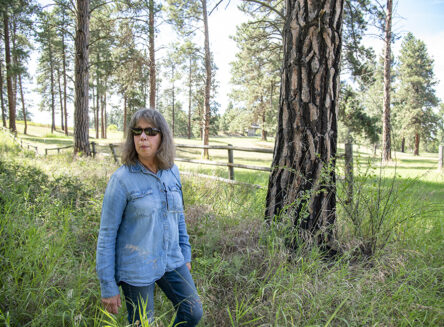
On the way to our outdoor classroom, the first stop had been a giant ponderosa, which we probably would have walked past had Horowitz not paused and said, “Magnificent.” At about 200 years old, the pine would take a couple of people to hug it properly. Its mottled trunk glowed a warm red in the late-morning sun, and green needles sparked outward.
Horowitz, who has worked as an outdoor educator for decades, is the second person in the state certified for guiding such excursions. The Japanese pioneered the practice in the 1980s to address a rise in stress-related illness. “Shinrin-yoku” (forest bathing) resulted from experiments such as placing blood pressure cuffs on people before and after visiting a forest.
Not only do we tend to feel better in nature, it sticks with us for good.
“Research shows that it can help build immunity,” Horowitz said.
You don’t have to go big either. When I was researching the essential elements for a home office in grad school, I came across a 2014 Japanese study that involved placing cut flowers 40 centimeters from employees' eyes for four minutes; benefits included “decreasing stress and improving the health of office workers.” I found multiple additional studies from around the globe confirming the positive physiological and psychological effects on people of windows framing a view to nature or live interior plants.
Horowitz said she has led successful forest bathing for people only able to access the former.
“So much of travel is between Point A and Point B,” she said. “Forest bathing only requires we be present.”
Once we settled on college property between the tennis courts and the Stillwater River, Horowitz began with invitations — a cross between a prompt and an activity.
For “pleasures of presence,” she asked us to focus on breath (“an ancient exchange between the plants and the animals”), sounds (near and far, loudest and quietest) and smells. Then we were urged to meander for the next prompt: “What’s in motion?”
Horowitz talked about watching a mountain lion walk through the forest when she lived near Polebridge. It lifted each paw slowly and carefully placed each step so that it seemed to float among the trees.
I try my best mountain lion, but the grasshoppers aren’t fooled. They bound and spray in all directions at every footfall. I look for other movement and find it in a quivering leaf and the slow-moving green ribbon of river seen through the trees.
Over tea at the end of the session, a participant said, “Thank you for slowing me down.” We all enjoyed this different way of experiencing nature.
A few weeks later I took a pine needle basketry class, also at the college. When I needed more needles to finish, I knew just where to find them.
Margaret E. Davis, executive director of the Northwest Montana History Museum, can be reached at mdavis@dailyinterlake.com.